Fungi Name Trail - Wild ID Guide
Fungi Name Trail - Wild ID Guide
Couldn't load pickup availability
The Wild ID Fungi name trail is a guide to common fungi for children.
- Features 28 species in Britain and Ireland
- Simple flowchart uses shape and colour to name mushrooms and toadstools
- Practical for use outdoors: lightweight, rucksack-sized, splash-proof
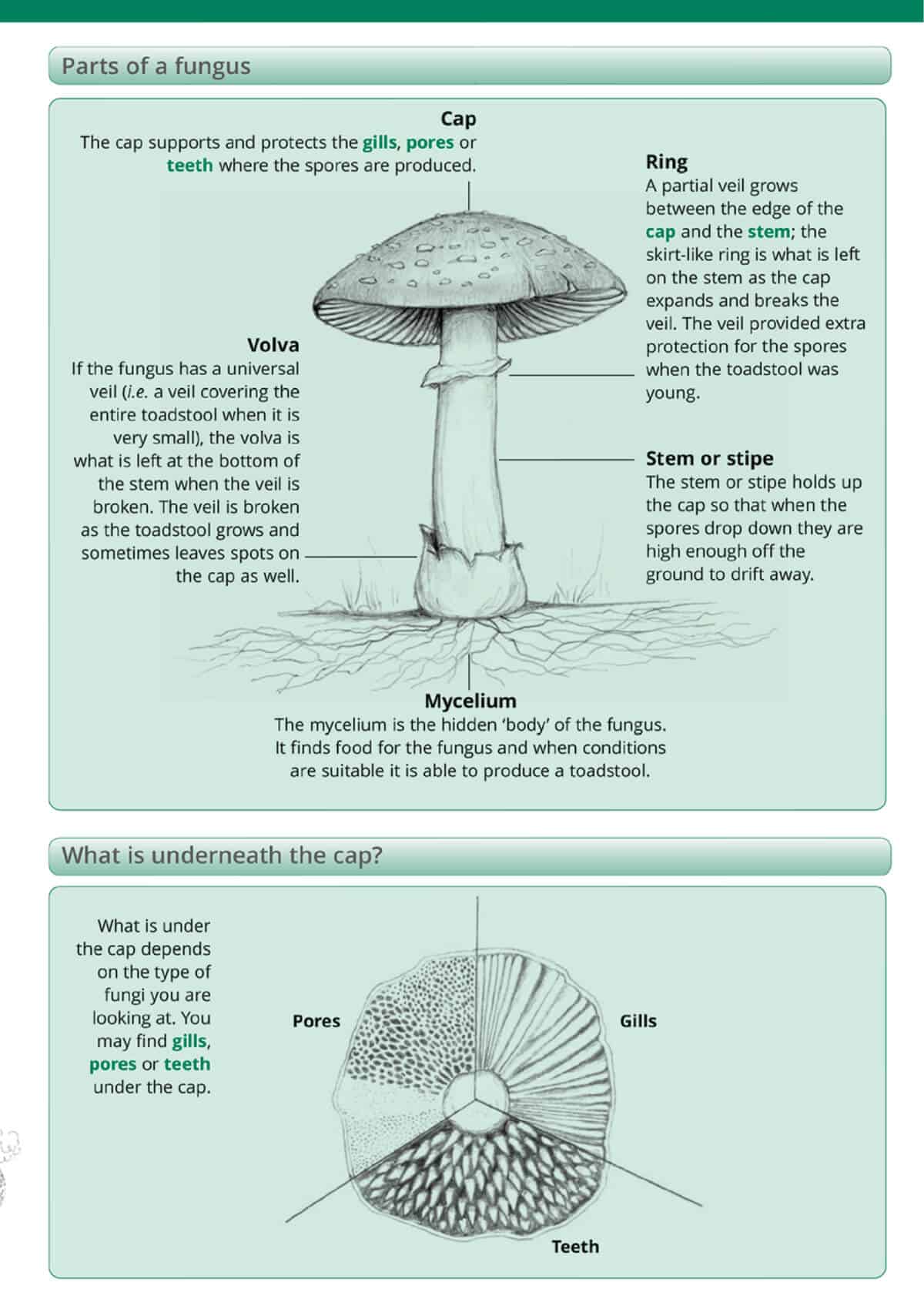
Although we’ve kept specialist terms to a minimum, some technical words are useful when talking about fungi. The text on the reverse explains the main parts of a fungus (cap, ring, stipe, volva and mycelium), as well as features under the cap like pores, frills and teeth. It also gives simple steps for making a spore print, plus a fun way to show how a fly agaric grows using a red balloon and toilet tissue.
Unlike plants, fungi can’t get energy from sunlight through photosynthesis. Instead, they’ve evolved other ways to feed. Some fungi are parasites that live on living trees or plants, playing an important role in woodlands. Most fungi, however, either break down dead plant and animal matter (decomposers) or live in partnership with plants (symbiosis). Decomposer fungi recycle nutrients by rotting wood and other material. Symbiotic fungi form a link with plants or trees, helping them absorb extra minerals from the soil. In return, the plant supplies the fungus with some of its sugars.
Please note that this is not a guide to the identification of edible fungi.
Field Studies Council worked with the British Mycological Society to produce the Fungi name trail.
These popular wildlife field guides measure 24.5 cm x 17.5 cm and are extremely lightweight so are the perfect identification aid for popping in your bag when heading outside. All wildlife identification guides are laminated, so are shower-proof and wipe-clean for use outside.