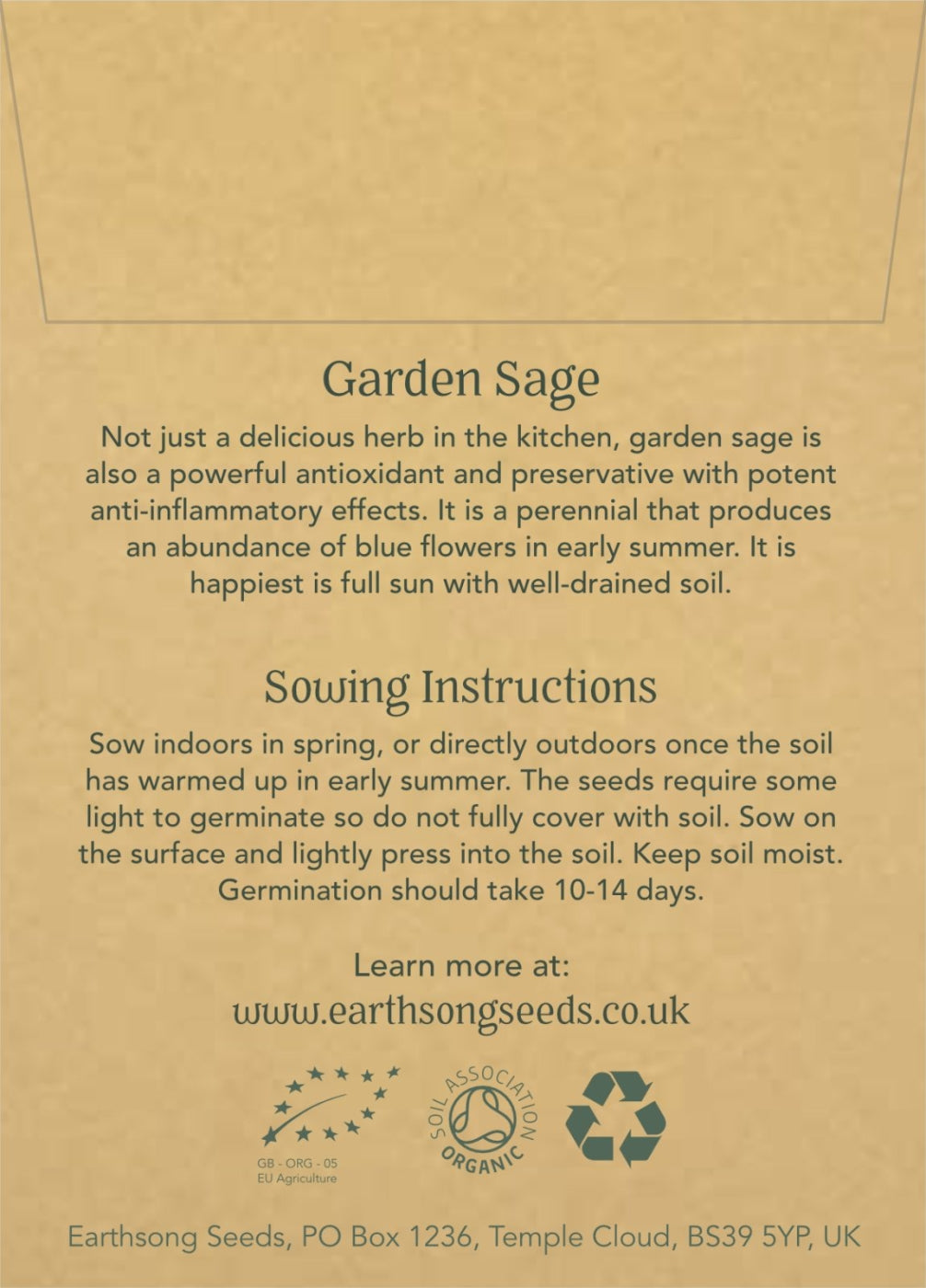
Garden Sage - Seed Packet
Couldn't load pickup availability
Salvia officinalis
Not just a delicious herb in the kitchen, garden sage is also a powerful antioxidant and preservative with potent anti-inflammatory effects.
When a species name contains the word ‘officinalis’ it implies that it has traditionally been used as a medicinal plant (scroll through the shop page and you’ll notice calendula, hyssop, marshmallow, valerian and others all share the same name…). There are many hundreds of species of sage, and even more varieties and cultivars. But it is Salvia officinalis – the most common of culinary sages – that is also traditionally recognised as the official ‘medicinal’ species.
A Mediterranean herb, garden sage prefers full sunshine and well-drained sandy soil. It flowers in early summer, producing prolific pinks and purples that can match most ornamental sage species. It is by far the tastiest of sages and should be grown close to the kitchen. All in all, a wonder plant that no garden should be without.
Salvia officinalis (common sage) is a hardy, evergreen perennial shrub that is easy to grow from seed, though it is more commonly propagated from cuttings once established. Seed can be sown indoors in spring, or sown directly outdoors in early summer once the soil has warmed and conditions are settled.
Sow the seed thinly and cover very lightly with compost or soil; sage does not require strict surface sowing, but seeds should not be buried deeply. Gently firm the surface and keep the compost moist but not wet. Germination is usually reliable, typically taking around 10–14 days in warm conditions.
Once seedlings are large enough to handle, prick out into individual pots and grow on until well established before planting out. If sowing directly, thin seedlings once established. Sage forms a bushy, woody plant over time, so allow a spacing of around 45–60cm between plants.
Salvia officinalis prefers a sunny position and free-draining soil, and performs best in lighter, relatively lean ground. Rich or waterlogged soils can shorten the lifespan of the plant. Once established it is drought tolerant and requires little ongoing care.
Plants usually make steady growth in their first year, and in the second year produce beautiful blue flowers that are highly attractive to pollinators. Sage is long-lived when given the right conditions and benefits from being left undisturbed in a permanent position.
- Growth and Harvested in the UK
- Certified Organic
- Minimum. 50 seeds per pack