Lavender - Seed Packet
Lavender - Seed Packet
Couldn't load pickup availability
Lavandula angustifolia
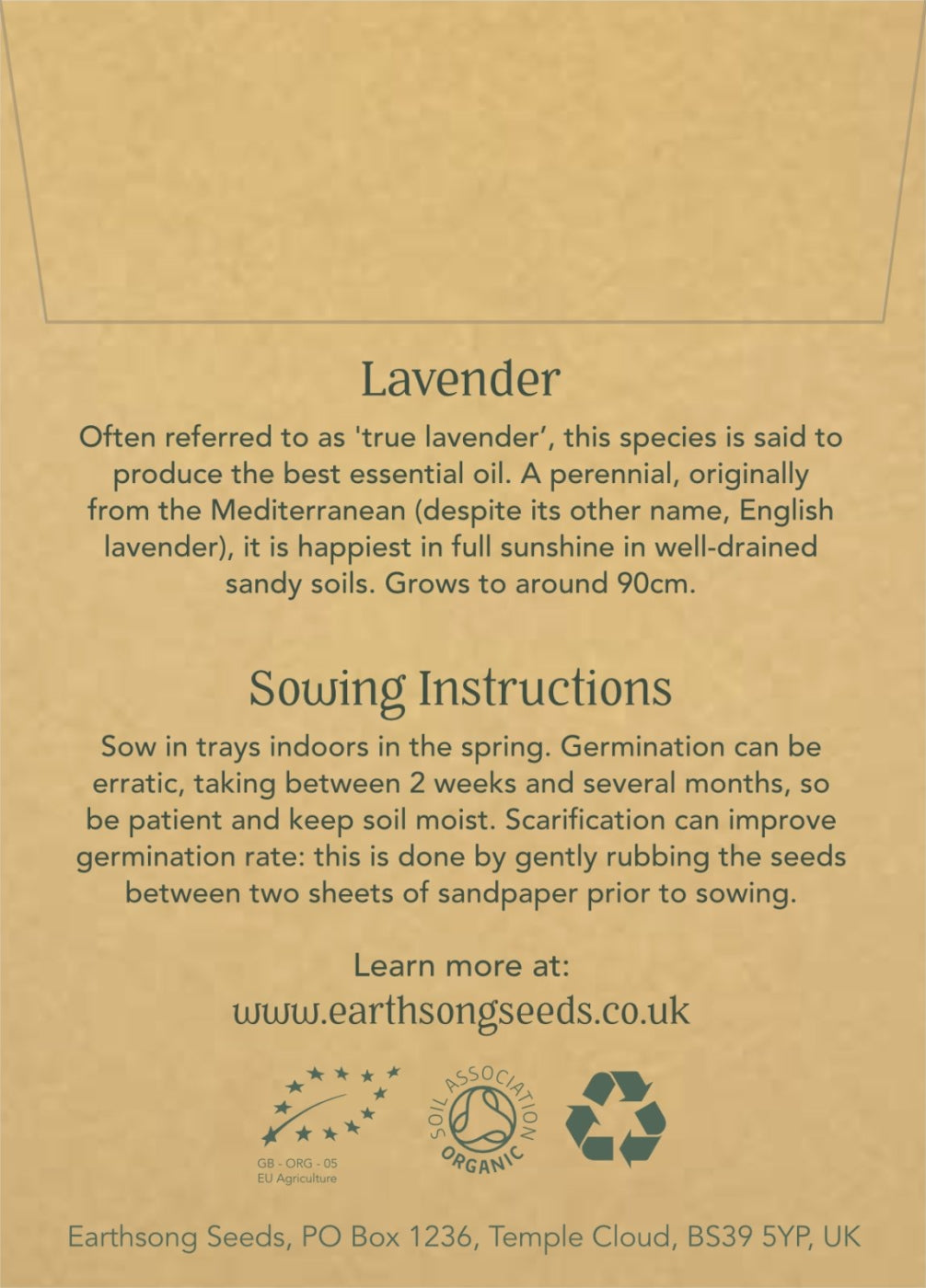
Often referred to as ‘true lavender’, this species is said to produce the best lavender essential oil, used and loved by millions for its beautiful aroma and relaxing effects.
The name lavender is derived from the Latin ‘lavare’ which means ‘to wash’. In Victorian and Elizabethan times, lavender was used to perfume clothes and bed linen due to washing and bathing not being common practice. Now it’s one of our ‘cleanest’ smells and a favourite relaxing herbal remedy.
Despite its name, English lavender is actually from the Mediterranean and grows best in hot sunshine in well-drained sandy soils (it will not survive long in shady, damp or very cold conditions). Sown from seed, you will get some flowers in the first year, but will need to wait until the second year to enjoy its full aromatic bloom.
A timeless and deeply soothing gift for anyone who loves fragrance, calm, and the gentle power of plants.
- Grown and harvested in the UK
- Certified organic
- Minimum 50 seeds